

Introduction
Since ancient times, humanity has searched for answers about the meaning of life, spirituality and the body. Religion and sexuality have often been two dimensions in apparent conflict. While many religious traditions have tried to repress or limit sexuality, others have recognized its power as a path toward the divine. Today, modern sexology proposes a more conscious integration of both spheres, in search of balance and harmony.
World religions: condemnation or spiritual path?
All the world's religions share a common goal: bringing human beings closer to God. And most of them propose the same route to get there — the purification of soul and body. Yet each religion has a different relationship with sexuality. Some forbid it, treating it as a sinful impulse; others encourage it as a tool for spiritual development.
Why this difference in approach? Perhaps the first step is to understand more deeply what religion is and why it exists. Looking closely, every religion can be seen as a set of self-transformation practices. And interestingly, they share many elements: purification of the body, mind and soul; the use of mantras or prayers to calm the mind; and care of the physical body so that it does not distract us from our path toward the divine.
Christianity and the notion of “fornication”
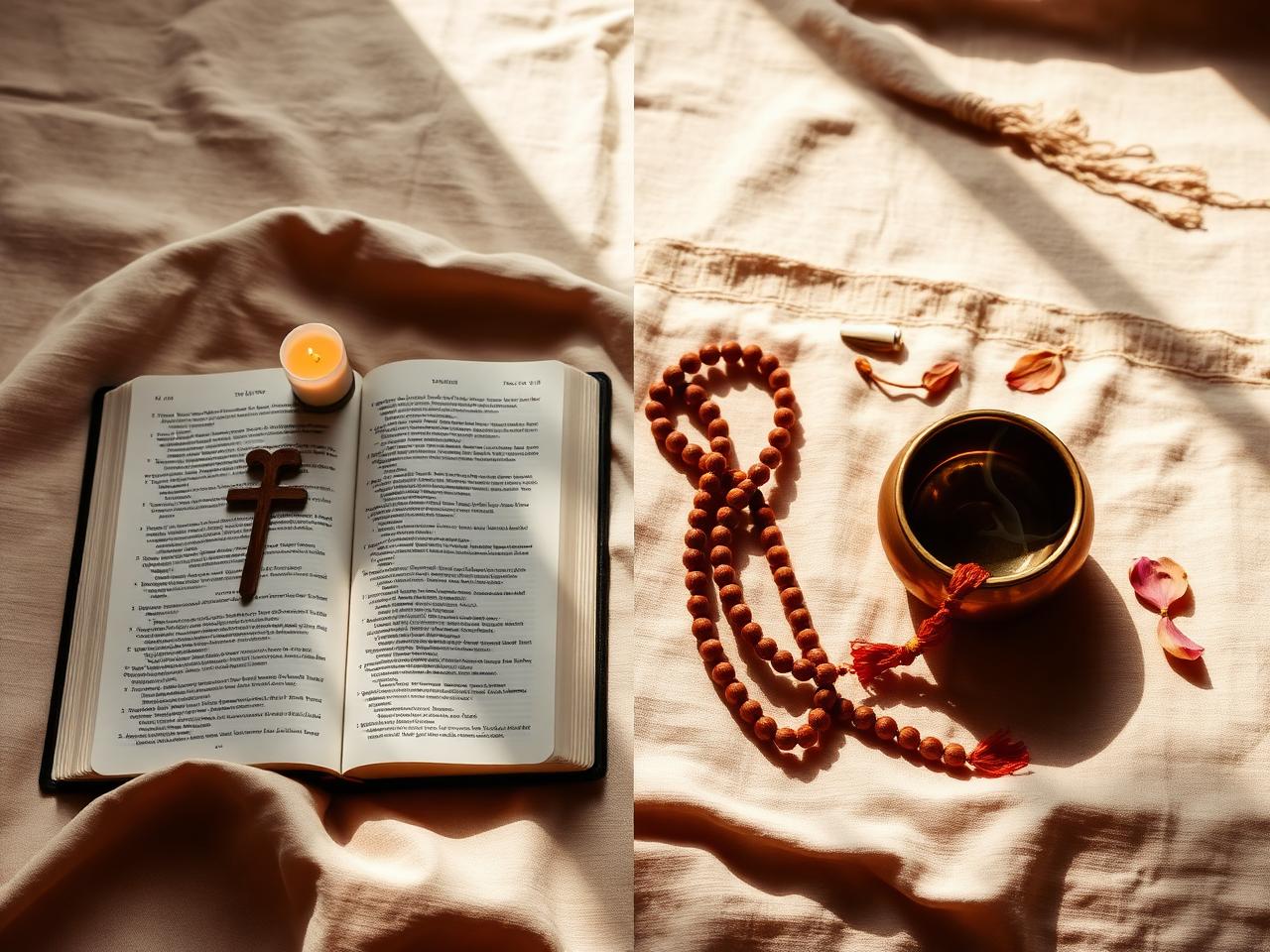
The Bible does not directly use the word “sex,” but rather “fornication.” This term has commonly been interpreted as sexual relations outside marriage. Etymologically, however, “forni-” implies excess, abuse. Some argue that over the centuries the interpretation of the sacred text was reshaped by cultural influences, decisions of religious leaders and historical contexts such as the Inquisition.
From this perspective, Christianity adopted a preventive stance: avoiding sexual contact so as not to fall into temptation or distraction. Many saints reached high levels of spirituality through abstinence, showing that this path can indeed be effective for certain forms of devotion.

The East: sexuality as transformative energy
By contrast, in Eastern traditions such as Taoism, Tantra and various schools of meditation, sexual energy is considered a powerful force that can be used for spiritual growth. These currents developed precise methods to channel it, redirecting it through the body's energy pathways.
Here, sex is not just a physical exchange but an energetic dance between the masculine and the feminine. The key difference is how that energy moves: in the West it tends to stay in the sexual centers and dissipate horizontally between the bodies. In the East, the energy rises vertically, activating higher centers such as the heart, intuition and expression.
Sexuality in popular culture and history
It's interesting to note that, before the stricter religious impositions, sex was not taboo in many cultures — including European ones. In Slavic rituals such as Ivan Kupala, nudity and group bathing were normal and accepted. It was later, with rigid morality and fear of pleasure, that sexuality became an object of shame or punishment.
At the other end of the world, practices such as sacred temple dances in India sought to awaken and guide sexual energy toward higher states of consciousness. These practices were not seen as vulgar or sinful, but as tools for self-knowledge and inner awakening.
And love? How is it taught?
A major difference between Western religions and Eastern philosophies is their approach to love. In Christianity we are told: “Love your neighbor.” But practical tools for actually doing so are rarely offered. Willpower alone is often not enough.
Eastern traditions, in turn, offer precise techniques to awaken love on an energetic level: working with breath, concentration, the body's energy points, and also the conscious use of sexual arousal. Through these practices, love is meant to become not just an idea but a lived experience that transforms the human being.
The view of modern sexology
Today's sexology is evolving toward a more holistic understanding. It no longer sees sexuality solely from a physical or reproductive angle, but as an integral dimension of the human being that includes the emotional, psychological, relational, spiritual and energetic.
Many modern currents, such as integrative sexology, are drawing on elements of these Eastern traditions to help people reconcile their spiritual life with their sexual life. It's not about abandoning religion, but about reinterpreting certain dogmas with new tools and knowledge.
This approach allows believers of different religions to live their sexuality fully, without guilt, while remaining committed to their spiritual path.
Conclusion: toward a new synthesis
Harmony between sexuality and religion is not only possible — it is necessary. It requires a shift in perspective, an openness to new ways of understanding the sacred and the bodily. Sexuality can be a path of self-knowledge, of loving connection, and also of transcendence. Religions offer the ethical and spiritual framework; modern sexology, the tools to integrate body and soul.

And you?
Do you think it's possible to live a full spirituality without repressing your sexuality? Do you feel that your religious beliefs conflict with your desire or your body? Write to me and share your experience or reflection. This is an open space, free of judgment, where dialogue can help us heal and grow.