
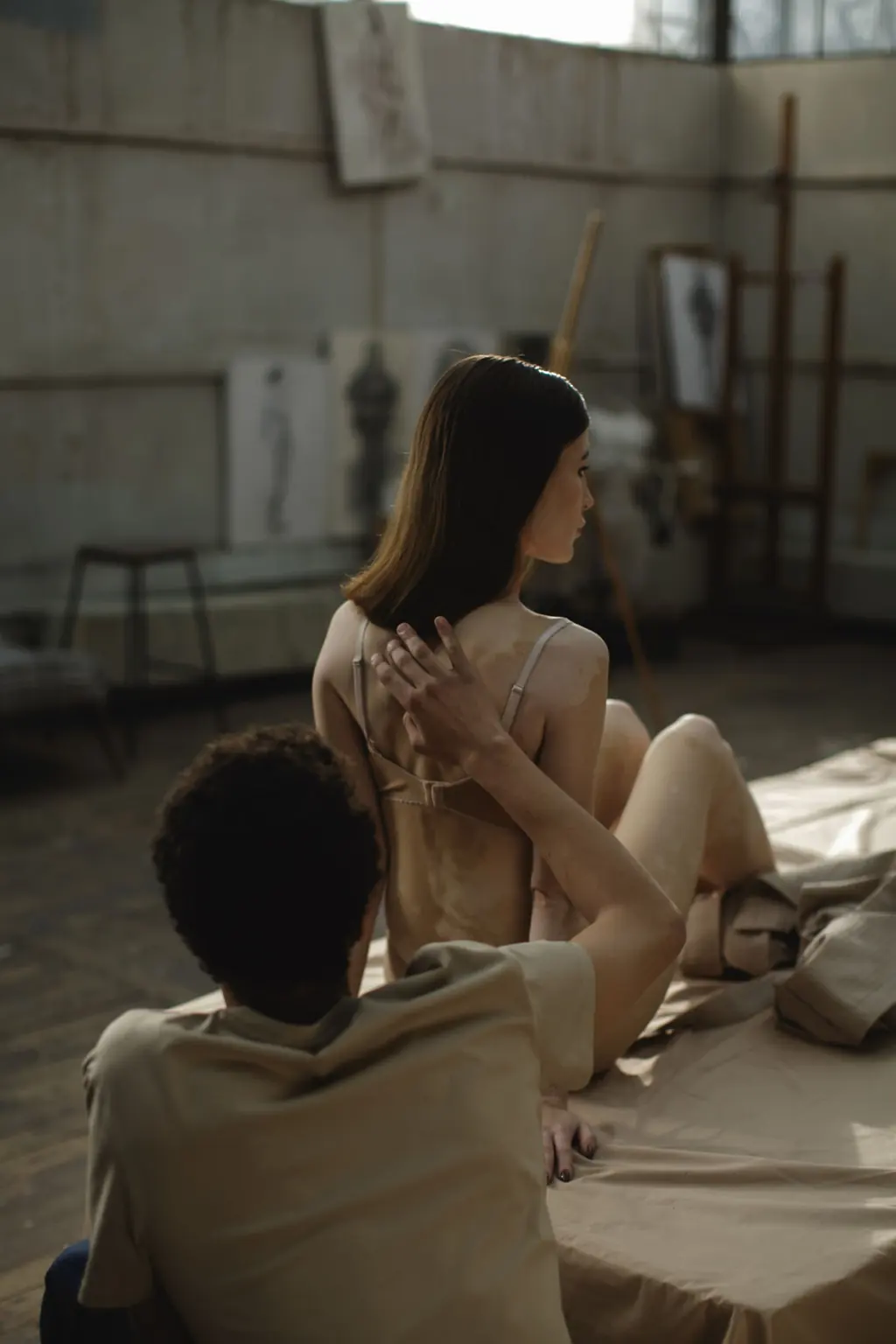
What is a personal erotic map?
A personal erotic map is the intimate record of what your body enjoys: which areas awaken you, with what kind of touch, at what rhythm, in what emotional context and at what time of day or cycle. It is not a fixed or universal list: it is a living map that changes with age, mood, health and the relationship you are in.
In my practice I see something very common: many people know their partner's preferences better than their own. Yet modern sexology agrees that pleasure is learned, and learning requires exploring with curiosity and without demanding a result.
Erogenous zones: far more than the genitals
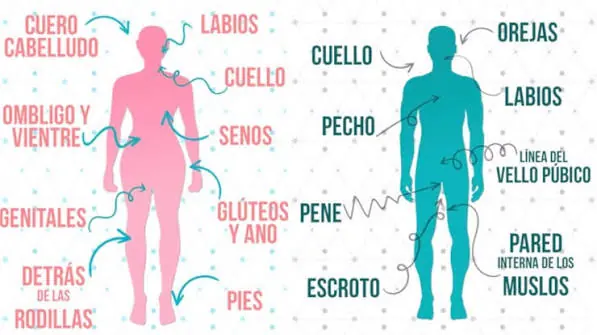
Erogenous zones are areas of skin with a higher density of nerve endings or with a strong symbolic and emotional charge. They are usually divided into primary (genitals, nipples, mouth) and secondary (neck, ears, nape, inner thighs, lower back, navel and belly, behind the knees, feet, buttocks, scalp).
In practice the distinction matters little: what counts is that any point of the body can become erogenous when given attention, time and meaning. Some people feel more pleasure in a slow scalp massage than in hurried genital contact.
The map below is a starting point, not a rule.
How to draw your own map: a four-step exercise
1. Prepare the space. No rush, no phone, a comfortable temperature. Safety is a physiological requirement of pleasure: if the body is on alert, arousal will not appear.
2. Explore with no goal. Move across the skin with different kinds of touch: fingertips, palm, soft nails, a fabric, temperature. Change pressure and speed. Don't look for orgasm; look for information.
3. Score what you feel. Afterwards, note mentally or on paper which areas were a 0, a 5 or a 10, and with which stimulus. The same spot can be unpleasant with quick friction and delicious with slow pressure.
4. Repeat and revise. The map changes. Redoing it from time to time — especially after pregnancy, surgery, menopause or a stressful period — keeps the body from running on outdated instructions.
From an individual map to a shared one
Once you have information about yourself, sharing it stops being criticism and becomes an invitation. A useful formula in couples therapy is “I like / I'd like to try / I'd rather avoid”: three columns you show each other without judgment.
Another classic exercise is taking turns mapping: for fifteen minutes one person touches while the other only receives and describes what they feel in one word. Then you swap. With no genitals or orgasm in the script, performance anxiety drops and curiosity appears.
Many couples discover here that the issue was never desire — they had simply been repeating a map that no longer matched either of them.
Common mistakes
Hunting for the magic spot. There is no universal button. What works is the combination of context, trust, attention and technique.
Going straight to the genitals. Arousal needs a warm-up; in many women the average time to arousal is notably longer than in their male partners, and that mismatch explains many complaints of “I don't feel anything.”
Confusing pain with intensity. Pain is not a phase of pleasure. If it appears, stop — and if it persists, seek advice.
Comparing your map with others. Your body doesn't have to respond like a film or like your previous partner.
When to ask for professional support
Exploring your own body is safe and healthy, but some situations are better navigated with support: pain during sex, lack of sensitivity, intense guilt, a history of traumatic experiences, or desire that has faded without explanation.
In those cases sex therapy works with gradual exercises, sex education and emotional regulation. The goal is not to perform more, but to inhabit the body with confidence again.
If you'd like to draw your erotic map with professional guidance, write to me and we'll see where to begin.