

The great paradox of contemporary sexuality
One of the great paradoxes of today's culture is the gap between the deregulation of sexual morality and the persistent unease that many people feel in their intimate lives. Sex has never been discussed so much, and we have never had so much information, variety of practices and unlimited access to erotic stimuli. And yet sexual dissatisfaction remains widespread.
The central hypothesis here is that the problem no longer lies in the punitive prohibitions of the past, but in new cultural obligations: relentless standards, performance demands and commercial promises of perfection that threaten to alienate us from our own bodily rhythms.
From prohibition to the duty to enjoy
Historically, erotic behaviour was constrained by religious morality and patriarchal order, with procreation and marital orthodoxy as the goal. Today, advanced societies offer unprecedented room to choose partners, question mandates and explore identities.
But that emancipation has subtly turned into a new form of servitude: the obligation to enjoy. We are expected to have frequent sex, constant desire, a normative body, advanced technical skills and endless lack of inhibition. The freedom to explore becomes a duty to experiment, forgetting that the freedom to say no to a practice is as legitimate as the freedom to choose it.
Social media, advertising and porn: desire as a product
The digital ecosystem intensifies this. Social media, recommendation algorithms and the porn industry build an imaginary in which intimacy is systematically commercialised. Advertising works in a loop: first it creates a sense of lack — about attractiveness, performance or variety — and then it sells the solution.
Online pornography tends to standardise unrealistic physiological responses, durations and body dynamics, creating expectations that rarely match everyday human experience. We receive more data than ever, but more information does not mean more self-knowledge.
Desire is not static: what sexology says
Sexology and psychology understand sexuality as an intersection of biological, psychological and sociocultural factors. Libido is neither fixed nor uniform: it fluctuates across the lifespan and is shaped by attachment, emotional safety and personal history.
It is worth asking to what extent we choose what we desire, or try to embody a socially successful archetype. Remember that a temporary or prolonged absence of desire is not in itself a disorder, and that sexual activity is not a requirement for a full, meaningful life.
The Blue Lagoon: a thought experiment without screens
To reflect on the limits of cultural conditioning, a film metaphor helps: The Blue Lagoon (1980). It is fiction, not scientific evidence, but its premise — two children growing up on a desert island, free from advertising, beauty standards and social comparison — works as a suggestive thought experiment.
It invites us to imagine how curiosity, affection and attraction would emerge without preset scripts, reminding us that much of today's erotic tension is constructed from the outside.
Dating apps and the paradox of endless choice
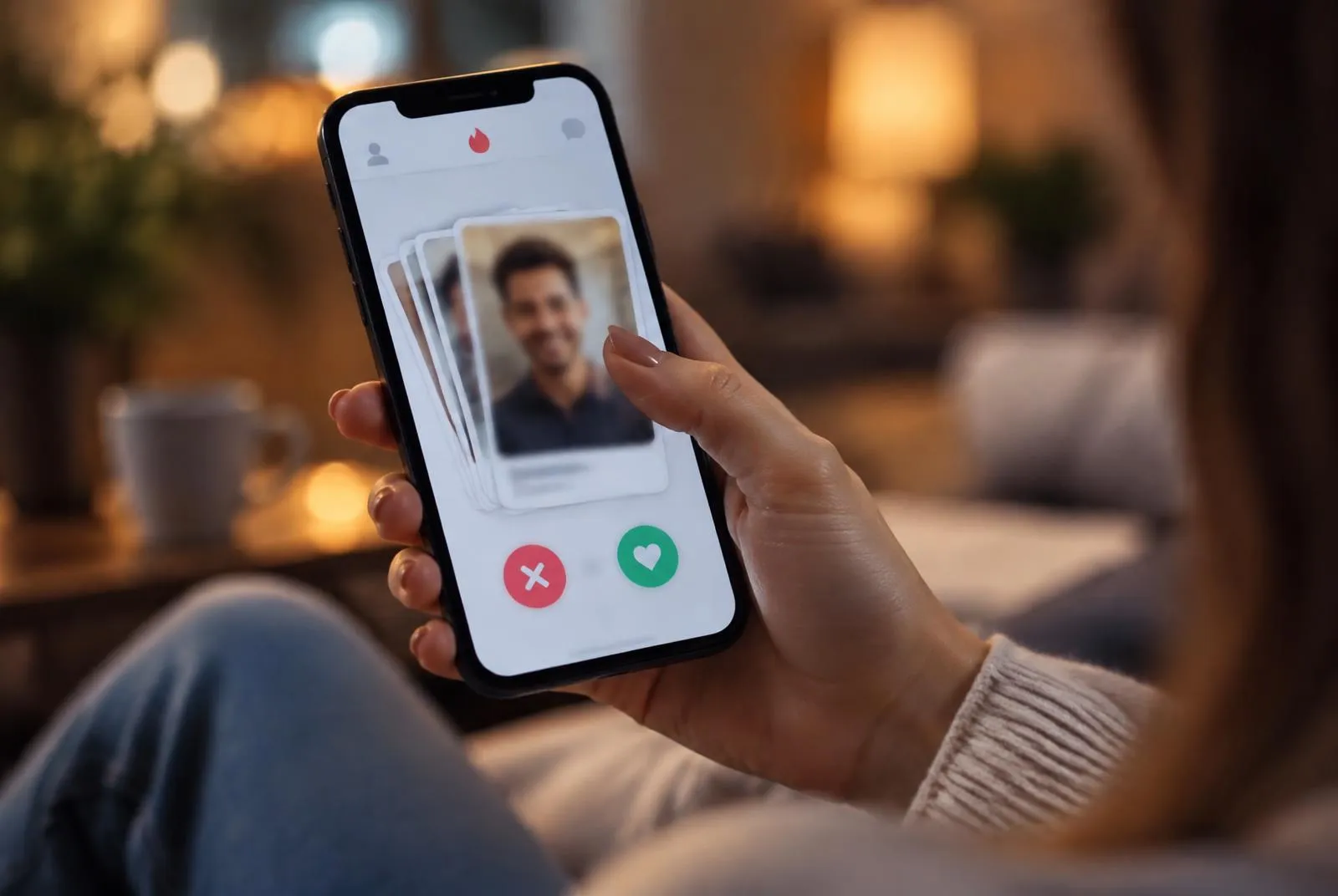
Added to this is the so-called paradox of choice. In a hyperconnected world where potential partners and stimuli multiply with every click, a real relationship can start to feel like a provisional option, always open to review.
The tendency to maximise alternatives and compare our own lives with exaggerated ideals fuels anxiety and weakens attention to the emotional intimacy we already have.

Who does your sexuality belong to?
At the heart of it lies an unavoidable question: if we orient our intimate lives towards external validation, who does our sexuality really belong to? Wanting more than the body asks for, rehearsing techniques for fear of judgment or choosing partners for their aesthetic value are signs of an erotic life colonised by performance.
Genuine sexual awareness does not begin by multiplying experiences, but by telling apart what belongs to our own limits and what are other people's mandates.
Sex is not a competition
Ultimately, sex is not a measure of human worth, status or personal success. It can take endlessly diverse forms: from steady frequency to chosen scarcity, to purely emotional intensities. The only indisputable criteria are consent, mutual respect and consistency with your own values.
If you notice your reality drifting away from what external standards dictate, perhaps it is time to rethink what you truly want. Because sex is, above all, an intimate space of encounter, not a performance contest.
Scientific sources
- Twenge, J. M., Sherman, L. A., & Wells, B. E. (2015). Changes in American adults' sexual behavior and attitudes, 1972–2012. Archives of Sexual Behavior, 44(6), 1453–1469. DOI: 10.1007/s10508-015-0544-2
- Mark, K. P., & Murray, S. H. (2012). A review of sexual desire discrepancies in couples. Journal of Sex & Marital Therapy, 38(3), 284–303. DOI: 10.1080/0092623X.2011.606766
- Hald, G. M., & Malamuth, N. M. (2008). Self-perceived effects of pornography consumption. Archives of Sexual Behavior, 37(4), 614–625. DOI: 10.1007/s10508-007-9212-1
- Impett, E. A., Muise, A., & Perelman, A. (2014). When sexual pursuits are costly: Understanding the implications of approach and avoidance sexual motives. European Review of Social Psychology, 25(1), 182–221. DOI: 10.1080/10463283.2014.979844
- Schwartz, B. (2000). The problem of choice: Too much of a good thing? Journal of Consumer Psychology, 10(1–2), 69–76. DOI: 10.1207/s15327663jcp1001-2_06